Electrostatic Discharge Machining (EDM) and Mitigating Bearing Currents in Electrical Systems
Posted on March 13, 2024
The realm of electrical engineering encompasses a multitude of intricate phenomena, and one such phenomenon is the Electrostatic Discharge Machining (EDM), commonly referred to as “Bearing Current.” While the subject might not be straightforward, it undoubtedly offers valuable insights into electrical systems and their potential vulnerabilities.
According to the IEC 60034-25 International Standard, Section 8.2.5 outlines EDM currents as a type of bearing current that arises from the spark erosion process known as Electrostatic Discharge Machining. This phenomenon arises due to the application of common mode voltage originating from the parasitic motor capacities within the lubrication gap of a rolling bearing. The capacitive interactions between windings, rotor, and stator form a voltage divider, thereby generating a potential difference between the rotor and stator. Consequently, this potential difference propels a bearing current, initiating of electrical phenomena within the system.
Consequences of Excessive Bearing Currents
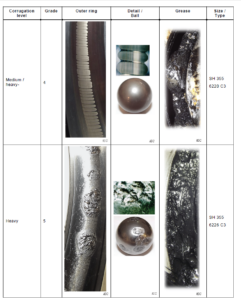
The repercussions of excessive bearing currents can be far-reaching and potentially detrimental to the overall performance and lifespan of electrical systems. As excessive currents course through the bearings, they induce stress and wear, ultimately compromising the integrity and longevity of the system. Ensuring effective mitigation strategies is of paramount importance to sustain the health and functionality of electrical systems.
Preventing High-Frequency Bearing Current Damage
In the pursuit of safeguarding electrical systems from high frequency bearing current damage, there are several fundamental approaches. These approaches can be employed individually or combined to create a robust defence:
- Proper Cabling and Earthing System: Implementing a well-designed cabling and earthing system establishes a foundation for mitigating bearing currents. This practice focuses on reducing impedance, enhancing safety, and preventing unwanted voltage fluctuations.
- Modification of Bearing Current Loops: By altering the bearing current loops, engineers can curtail the pathways through which these currents travel. This strategic modification aids in minimizing the impact of high-frequency currents on bearing life.
- Damping High-Frequency Common-Mode Currents: Introducing mechanisms to dampen the high-frequency common-mode currents can effectively curtail their intensity. This dampening action lessens the potential harm caused by these currents.
- Damping High-Frequency Common-Mode Voltages: Similar to current damping, controlling high-frequency common-mode voltages can significantly contribute to the reduction of bearing current pulses, thereby enhancing system longevity.
All these tend to decrease the voltage across the bearing lubricant to values that do not cause high-frequency bearing current pulses at all or dampen the value of the pulses to a level that has no effect on bearing life. For different types of high-frequency bearing currents, different measures need to be taken. The basis of all high-frequency current solutions is the proper earthing system. Standard equipment earthing practices are mainly designed to provide a sufficiently low impedance connection to protect people and equipment against system frequency faults. A Variable Speed Drive can be effectively grounded for high common-mode current frequencies if the installation follows the principles of Clause 9.
Advanced Preventive Measures
Beyond the fundamental approaches, advanced preventive measures have proven to be highly effective in minimizing bearing current damage:
- Use of Insulated Bearings: Incorporating insulated bearings into the system provides an additional layer of protection against bearing currents, isolating the electrical path and minimizing their impact.
- Common Mode Inductivities (Chokes) and Nanocrystalline Iron Cores: These components are introduced into the system to alter the impedance conditions and attenuate the excitation of common-mode currents, thereby mitigating their effects.
- Filters for Common-Mode Voltages and du/dt: Employing specialized filters aids in reducing common-mode voltages and voltage rate of change (du/dt), ensuring a smoother electrical path.
- Non-Conductive Couplings and Brush Contacts: Using non-conductive couplings prevents damage to sensitive devices, while brush contacts between the shaft and motor frame offer an alternative path for currents, safeguarding bearings.
- Use brush contact(s) between shaft and electrical motor frame.
- Optimizing Motor and Converter Parameters: Operating the electrical motor and converter at lower voltage levels and switching frequencies further diminishes the risk of bearing current damage.
- Sequential Inverter Phase Switching: To mitigate the effects of bearing currents, it’s advised to avoid simultaneous switching of two inverter phases in opposite polarity.
For in-depth exploration and practical solutions to mitigate bearing current-related challenges, we offer an additional accessory to prevent bearing damage, such as Earthrings Grounding Ring and AEGIS Grounding Ring.In addition to the inverter-rated insulation (standard across TECO motors), TECO recommends the fitment of a shaft earthing brush and an insulated NDE bearing on 280 frame and above to mitigate the effect of VSD-induced shaft currents (which can damage the motor bearings). Although quoted as additional costs, protection against VSD-induced shaft currents can only be ensured if an insulated bearing and a shaft earthing brush are installed. Whilst there are different recommendations provided by the IEC, NEMA, CSA and other standards or industry bodies, TECO refers to IEC60034-17 and IEC60034-25 and recommends the following:
- All installations must be done in accordance with IEC60034-17 and IEC60034-25
- Rotor Groundary brush on the drive-end and insulated bearing (for insulated housing) on the non-drive-end for frames 280 and above
- Setting the VSD carrier frequencies might increase shaft currents.
Alternatively, the user may wish to specify a common mode voltage filter, to be installed at the VSD output and effective eliminate common mode voltages which are the root cause of VSD-induced shaft currents.
In conclusion, the intricate realm of Electrostatic Discharge Machining (EDM) and the subsequent bearing currents is a complex subject within electrical engineering. By understanding the underlying mechanisms and employing a combination of preventive measures, engineers can effectively safeguard electrical systems against the detrimental effects of high-frequency bearing currents. Through a combination of proper earthing, advanced components, and strategic modifications, the electrical engineering community can uphold the integrity and longevity of their systems in the face of these challenging phenomena.
PrevPrevious NextNext Related posts Where electric motors fail: heat, supply, bearings, water and dustMost industrial motor failures end in a winding or a bearing issue, and most of them start to fail months earlier, in the specification, the installation or the maintenance routine.
Read more Three-phase induction motor selection: frame size, duty, IP rating and efficiency class for Australian sitesSpecify and select a three phase motor in this order: load and duty, then the drive arrangement, then the site, and only then the efficiency class and the frame. Wrong
Read more What is a variable speed drive?A variable speed drive (VSD) is a power electronic controller that sets the speed of an AC motor by varying the frequency and voltage it supplies, instead of running the
Read more© Copyright 2025 TECO Pty Ltd
Products Customer Service Teco Social https://electricmotors.teco.com.au/wp-content/uploads/sites/53/2026/05/ISO9001-Intertek-SAI-Global-Certificate-QEC3088-Expiry-25-May-2029.pdf https://electricmotors.teco.com.au/wp-content/uploads/sites/53/2026/08/ISO45001-Intertek-SAI-Global-Certificate-0185118-Expiry-22-August-2027.pdf Enquire Now Selectors Preferred Service Center Enquire Now Selectors Preferred Service Center https://electricmotors.teco.com.au/contact-us/ tel:+61297658118Images on This Page
-
https://electricmotors.teco.com.au/wp-content/uploads/sites/53/2023/11/White_01.png
TECO logo
-
https://electricmotors.teco.com.au/wp-content/uploads/sites/53/2023/11/Mining-150922-P1010749-LR.png
Low Voltage Motors
-
https://electricmotors.teco.com.au/wp-content/uploads/sites/53/2023/11/TECO-SQUIRREL-CAGE-TEAAC-transparent-2.png
Medium and High Voltage Motors
-
https://electricmotors.teco.com.au/wp-content/uploads/sites/53/2023/11/All-Drives.png
Drives
-
https://electricmotors.teco.com.au/wp-content/uploads/sites/53/2023/11/MV510_Main.png
Medium Voltage Drives and Soft Starters
-
https://electricmotors.teco.com.au/wp-content/uploads/sites/53/2023/11/vibrator_main_800x800.png
Invicta Vibrator Motors
-
https://electricmotors.teco.com.au/wp-content/uploads/sites/53/2023/11/star-delta-starters_main.png
Motor Controls
-
https://electricmotors.teco.com.au/wp-content/uploads/sites/53/2023/11/Screen-Shot-2023-12-06-at-2.49.11-pm.png
IoT - MHM and Smart Motor
-
https://electricmotors.teco.com.au/wp-content/uploads/sites/53/2026/03/TECO-TSXi-1200.png
(no alt text)
-
https://electricmotors.teco.com.au/wp-content/uploads/sites/53/2024/03/image1-241x300.png
(no alt text)
-
https://electricmotors.teco.com.au/wp-content/uploads/sites/53/2026/10/where-electric-motors-fail-te3.webp
TECO Te3 cast iron three phase electric motor in front of a foundry
-
https://electricmotors.teco.com.au/wp-content/uploads/sites/53/2026/10/three-phase-induction-motor-selection-te3-maxe3-maxev4.webp
TECO Te3, MAXe3 Mining and MAXeV4 three phase induction motors at a mine site
-
https://electricmotors.teco.com.au/wp-content/uploads/sites/53/2026/10/what-is-a-variable-speed-drive-f510.webp
TECO F510 variable speed drive in front of a water treatment plant
-
https://electricmotors.teco.com.au/wp-content/uploads/sites/53/2023/12/NP1673761_hi-res-1024x522.png
(no alt text)
-
https://electricmotors.teco.com.au/wp-content/uploads/sites/53/2023/12/iso-9001-badge.png
(no alt text)
-
https://electricmotors.teco.com.au/wp-content/uploads/sites/53/2023/12/iso-45001-badge.png
(no alt text)
-
https://px.ads.linkedin.com/collect/?pid=9273978&fmt=gif
(no alt text)